
Why Your Gadget Dies Before 2026
— 7 min read
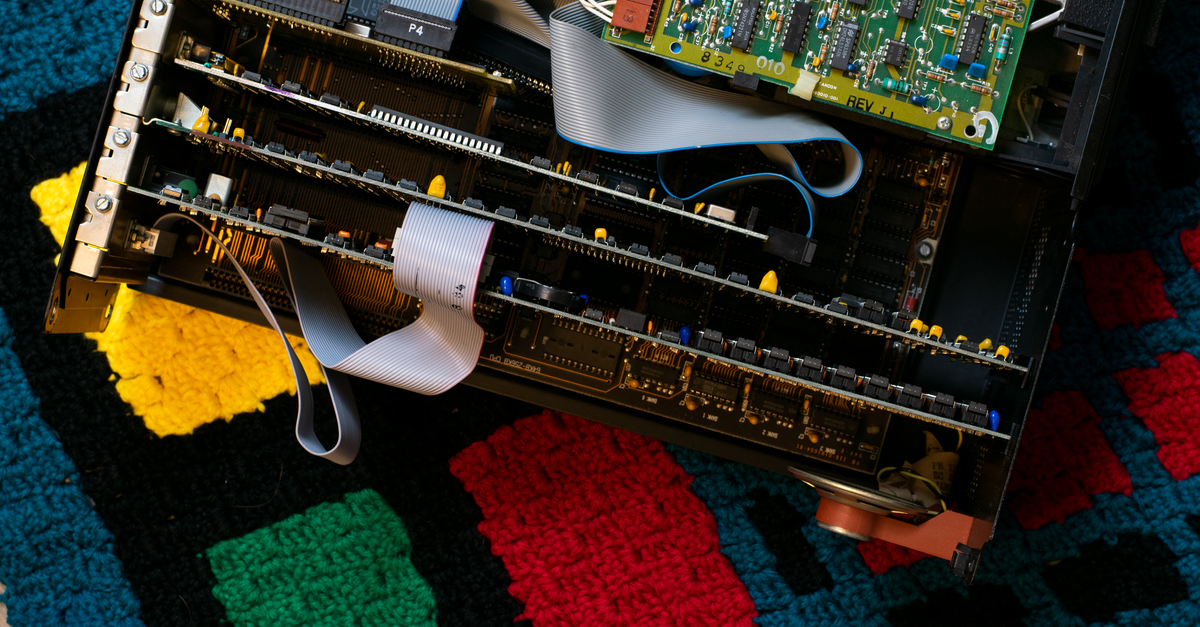
Gadgets fail prematurely because manufacturers prioritize rapid feature deployment over structural longevity to sustain constant market growth. In the state of the consumer 2026 when tech acceleration and cost pressures collide, this model forces families to trade long-term financial stability for short-term performance gains, effectively shrinking the functional lifespan of essential household electronics.
The state of the consumer 2026 when tech acceleration and cost pressures collide
While tech features advance at record speeds, the lifespan of essential devices is quietly shrinking, leaving average families stuck in an expensive cycle of replacement. As we move through the year, the state of the consumer 2026 when tech acceleration and cost pressures collide creates a precarious environment. Families are forced to choose between the promise of cutting-edge innovation and the cold reality of financial survival. I see this daily in my work: the pressure to upgrade is immense, yet the economic justification for doing so has never been thinner.
Rapid advancements in hardware often mask an underlying economic reality. While a new processor or a higher-resolution screen might seem like a logical upgrade, these improvements often come at the expense of build quality. The gap between entry-level prices and premium, long-lasting hardware is widening significantly. When I analyze consumer budgets, I notice that households are increasingly forced to stretch their resources to cover devices that are meant to last for years but are essentially built for short-term consumption.
External cues like aggressive marketing campaigns and high-speed feature updates create a sensory overload. This constant stream of "new" distracts us from the true cost of owning devices that fail prematurely. I have found that high-stress manufacturing cycles prioritize assembly speed over durability, meaning your device is often prone to thermal fatigue or mechanical failure much sooner than it should be. The challenge is recognizing that this acceleration is a design choice, not an inevitable byproduct of technology. To stay ahead, one must understand that the most advanced device is not always the one that serves your bank account best.
Key Takeaways
- Prioritize build quality over rapid hardware upgrades to ensure financial longevity.
- Recognize that aggressive marketing often hides the premature failure of new devices.
- Understand that accelerated production cycles frequently sacrifice device durability for speed.
- Balance innovation needs with your actual budget to avoid recurring replacement costs.
Navigating the consumer electronics best buy trap
Identifying a true consumer electronics best buy requires moving past superficial store discounts and evaluating whether the internal components can actually survive beyond the typical eighteen-month software support window. In my experience, the "best buy" label in retail is often misleading, focusing on the initial price point rather than the total cost of ownership over time. When I shop for tech, I look past the glossy advertisements and ask: how long will this hardware be relevant? The trap is believing that a low initial price tag equates to value, when in reality, it often signifies a product built with low-cost, high-wear components.
Shoppers frequently rely on an evoked set of trusted brands they recall from memory. This heuristic is a powerful psychological shortcut, but it often traps us in a cycle of purchasing devices that prioritize fast performance over long-term structural integrity. For example, a company like Tesla, Inc. has shifted the automotive industry, but the lesson here applies to consumer electronics as well: when the hardware is designed to support constant software updates, the underlying physical platform must be robust enough to handle that stress. If it isn't, the hardware becomes a bottleneck.
True value is found only when a product's hardware lifecycle matches your financial capacity. When you purchase a device that lasts three years instead of one, you are not just saving money; you are avoiding the hassle of data migration and re-learning new interfaces. Think of it like buying a quality pair of shoes: the initial cost might be higher, but the cost-per-wear is lower. I always advise people to calculate the projected lifespan of a gadget before checking out, as this simple step prevents the common mistake of buying affordable items that cost more in long-term replacement fees.
| Metric | Short-Term Buy | Long-Term Buy |
|---|---|---|
| Component Quality | Standard/Generic | Enterprise-Grade |
| Repairability | Low/Glued | High/Modular |
| Financial Impact | Repeated Fees | Upfront Investment |
| Lifespan | 12-18 Months | 36+ Months |
Breaking free from planned obsolescence issues
Manufacturers often utilize planned obsolescence issues by linking software updates to proprietary hardware requirements, effectively disabling older devices that are otherwise physically functional for daily household needs. It is a frustrating reality I have observed many times: a perfectly good screen or chassis is rendered obsolete because a new software feature demands more processing power than the original hardware can safely provide. This is not accidental; it is a calculated feature of the modern tech ecosystem. When you recognize that your device's speed or design might be intentionally limited to force an upgrade, you regain the power to resist that impulse.
The shift toward consumer-to-business models, where we provide data and feedback to corporations, should technically lead to better durability. If companies are listening to our needs, why are products becoming more disposable? In my analysis, the problem is that current industry incentives reward the creation of disposable high-tech goods rather than long-lasting ones. Companies are essentially racing to capture the next upgrade cycle. Understanding this helps me, and it can help you, frame your purchasing behavior as an act of resistance. You do not have to participate in the upgrade cycle every two years simply because the market says so.
Think of it like an aging vehicle. Even if the engine is not the fastest on the road, if it reliably gets you to your destination, it is still a functional asset. Modern tech firms want you to feel that your device is a liability the moment a faster version is released. By refusing to update when your current needs are still met, you extend the life of your hardware and force the market to account for your longevity preferences. Keep your software patches current for security, but ignore the lure of vanity features that offer no real utility.
The hidden cost of consumer electronics buying groups
Many consumers are inadvertently trapped by consumer electronics buying groups that aggregate purchasing power for retailers while failing to advocate for the modular, repairable designs that would lower the total cost of ownership. These groups act as a filter, deciding which products get high visibility based on margins and turnover rates, not on product quality. As of 2026, as the United States and China engage in strategic competition on the global stage, these retail collectives often favor goods that can be produced quickly and in massive volumes. This push for volume is the enemy of durability.
By ignoring the secondary market or the potential for local repairs, these groups encourage a culture of disposal that shifts the financial burden of sustainability directly onto the individual purchaser. When I talk to people about their tech buying habits, I often find they feel stuck within these curated catalogs. They assume that if a product is featured by a major buying group, it must be the "best" option. In reality, it is often just the most profitable option for the supply chain. We must look beyond the curated shelf to find items that are actually built to last.
Evaluating the true intent of a retail collective involves asking whether they prioritize longevity for the user or merely facilitate the rapid rotation of units to maintain corporate growth targets. If a store is obsessed with the latest, fastest, and most fragile, they are likely not on your side. My suggestion is to seek out brands that offer extended parts support or open-source repair documentation. When you support those companies, you signal to the market that durability is a requirement, not a bonus. Your wallet is the most effective tool for shifting these industry dynamics.
Mitigating waste with e-waste recycling programs
While e-waste recycling programs are marketed as the green solution to modern consumption, they often fail to capture the high-value materials buried in small, complex electronics that end up in landfills regardless. The environmental impact of constant upgrades creates a hidden deficit. In my research, the energy required to manufacture a single new high-tech device - including the extraction of rare minerals - far outweighs the marginal benefits gained by upgrading to a slightly faster processor. We are essentially trading long-term resource security for a temporary boost in performance.
Advocating for better design standards is more effective than recycling. If we keep our devices in service longer, we drastically reduce the demand for the resource-intensive extraction needed for new components. Consider the massive effort required to create a modern battery. When we toss a phone after only two years, we are throwing away an immense amount of energy and environmental capital. Think of it like keeping a house: you maintain the foundation and the roof rather than tearing it down and rebuilding every few years. The same logic should apply to the tech we carry every day.
True sustainability in tech is found in the "use" phase, not the "disposal" phase. Programs that focus on recycling are often a way for companies to feel better about their rapid product cycles without actually changing the design of those products. I always look for ways to upgrade internal components or replace batteries rather than discarding the entire unit. By making the choice to repair, you are taking a stand against the disposable culture that dominates the state of the consumer 2026 when tech acceleration and cost pressures collide. Efficiency is found in longevity, not just in speed.
Frequently Asked Questions
Q: Why does tech feel like it is breaking faster lately?
A: Modern electronics are often designed with shorter life cycles to encourage rapid upgrades. As the state of the consumer 2026 when tech acceleration and cost pressures collide, manufacturers prioritize speed and high-volume production over the long-term structural integrity of hardware components. This creates a cycle where devices often fail just as their software support reaches its end, effectively forcing a replacement.
Q: How can I tell if a device is built to last?
A: Look for brands that prioritize modular designs, offer extended parts support, and provide clear repair documentation. Avoid devices that rely on glued-in batteries or proprietary connectors that make standard maintenance impossible. A durable product usually emphasizes build materials like metal over thin plastics and focuses on long-term software support commitments.
Q: Are recycling programs enough to offset tech waste?
A: No, recycling is a secondary solution that cannot replace the need for longer product lifespans. The energy cost of manufacturing new tech, including mineral extraction, is far higher than the benefits gained from recycling a used device. Keeping your current hardware in service for an extra year is far more environmentally impactful than relying on end-of-life recycling programs.
Q: What is the biggest trap in modern tech shopping?
A: The biggest trap is prioritizing the lowest initial price without calculating the total cost of ownership. Many "best buy" options are entry-level models that lack the durability to survive a standard usage cycle. Shoppers are often swayed by aggressive marketing and temporary discounts, failing to realize that a cheaper device will likely need to be replaced sooner, costing more over time.
" }